A confident family dog doesn’t happen by accident.
It happens through structure, clarity, and consistency — especially in homes filled with children, guests, noise, movement, and unpredictable schedules.
Many families believe love alone creates a great dog.
Love matters.
But confidence is built through:
- Predictable routine
- Clear communication
- Structured exposure
- Calm leadership
- Consistent boundaries
In busy households, this structure becomes even more important.
What a “Confident Family Dog” Actually Means
Confidence is not hyperactivity.
It’s not dominance.
It’s not fearlessness.
A confident family dog:
- Recovers quickly from stress
- Listens even when excited
- Settles when asked
- Handles noise without panic
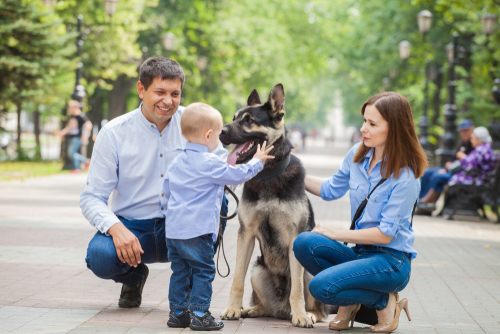
- Interacts gently with children
- Remains stable around guests
Confidence equals emotional balance.
And emotional balance is teachable.
The Foundation: Routine Before Chaos
Children wake at different times.
Guests drop by unexpectedly.
Schedules change.
Your dog needs something stable.
Start with:
👉 The Modern Dog Routine: How Structure Shapes Behavior
Routine gives dogs predictability — even when family life feels unpredictable.
When feeding, walking, and training happen consistently, dogs feel secure.
Teaching Children How to Interact Properly
Most behavior problems in family homes stem from unclear interaction rules.
Children should be taught:
✔ No climbing on the dog
✔ No disturbing during rest
✔ No grabbing food or toys
✔ Calm greetings
✔ Clear command language
Dogs need clarity just as much as children do.
When kids and dogs both understand expectations, harmony improves dramatically.
Managing Excitement Levels
Busy homes naturally increase stimulation.
Doorbells, laughter, running, toys — all amplify energy.
Confident dogs learn how to:
- Greet calmly
- Ignore sudden noise
- Settle on cue
- Avoid jumping
Impulse control training is essential.
For practical reinforcement methods, see:
👉 Positive Reinforcement in Real Life (Not Just in Theory)
Reward calm before chaos appears.
Preventing Overstimulation
Many families accidentally create overstimulated dogs by:
- Encouraging rough play
- Rewarding excited jumping
- Allowing inconsistent boundaries
- Reacting emotionally to mistakes
Overstimulation leads to:
- Nipping
- Barking
- Zoomies indoors
- Destructive behavior
For early prevention strategies:
👉 Preventing Destructive Behavior Before It Starts
Prevention is easier than correction.
Socialization the Right Way
Socialization doesn’t mean overwhelming exposure.
It means:
- Gradual experiences
- Positive associations
- Calm reinforcement
- Controlled introductions
Children’s friends, delivery drivers, extended family — all present learning opportunities.
Confidence grows when experiences are positive and structured.
Family Dogs Need Mental Engagement
In busy homes, physical exercise alone is not enough.
Mental stimulation reduces chaos.
Use:
- Puzzle feeders
- Scent games
- Short training drills
- Calm “place” sessions
If you need enrichment ideas:
👉 Mental Stimulation for High-Energy Dogs (Beyond Walks
Mental fatigue improves emotional stability.
Teaching “Place” — The Family Superpower Command
One of the most powerful tools in a family home is the “place” command.
It teaches a dog to:
- Go to a designated spot
- Stay until released
- Remain calm during activity
Use it during:
- Dinner time
- Guest arrivals
- Kids playing
- Movie nights
Place builds self-regulation.
Apartment Families vs. Yard Families
Whether you live in an apartment or a home with a yard, structure matters more than space.
For urban families:
👉 Apartment Living With Active Dogs: What Actually Works
Yards do not replace leadership.
Routine does.
Handling Mistakes Calmly
In busy homes, mistakes will happen.
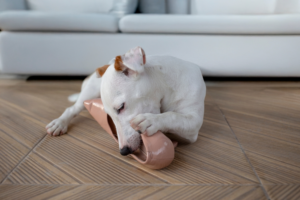
Shoes may get chewed.
A jump may knock over a child.
Excitement may escalate.
Respond with:
✔ Calm interruption
✔ Redirection
✔ Reinforcement of desired behavior
Avoid:
❌ Yelling
❌ Inconsistent punishment
❌ Emotional reactions
Dogs mirror household energy.
Calm leadership builds calm dogs.
Confidence Comes From Clarity
Dogs feel secure when they know:
- Where to sleep
- When to eat
- How to greet
- What behavior earns praise
- What behavior redirects them
Inconsistent homes create anxious dogs.
Structured homes create confident ones.
Signs Your Dog Is Gaining Confidence
Watch for:
- Faster recovery after loud noise
- Reduced jumping
- Better impulse control
- Calmer greetings
- Ability to settle independently
Confidence grows gradually — not overnight.
Raising Puppies in Busy Homes
If starting with a puppy:
- Introduce children slowly
- Teach bite inhibition early
- Use structured naps
- Avoid overwhelming stimulation
Puppies need rest as much as exposure.
Balanced exposure builds resilience.
The Psychology Behind Family Stability
Dogs are social animals.
In family homes, they observe:
- Emotional tone
- Leadership consistency
- Household patterns
When leadership is predictable and calm, dogs:
- Develop trust
- Reduce anxiety
- Increase listening
- Show emotional stability
Confidence is rooted in trust.
Trust is rooted in clarity.
Final Thoughts
Raising a confident family dog is not about perfection.
It’s about intentional structure.
When routine, reinforcement, enrichment, and boundaries work together, even the busiest households can create:
- Calm greetings
- Stable behavior
- Gentle interactions
- Emotional resilience
Family life does not have to overwhelm your dog.
With structure, it can strengthen them.
This article connects directly to:
👉 The Modern Dog Routine
👉 Mental Stimulation for High-Energy Dogs
👉 Apartment Living With Active Dogs
👉 Positive Reinforcement in Real Life
👉 Preventing Destructive Behavior
Together, these form the complete Modern Dog Living framework.